|
Pushback on Credit Unions
Gobbling Up Banks
| | |
"When a credit union acquires a bank, state or local governments can lose much of the tax revenue that the bank was paying," recently wrote Manish Bhatt, Senior Policy Analyst with the Tax Foundation. "A tax preference originally designed to level the playing field now has the opposite effect, creating preferences for one class of financial institutions even though the distinctions between credit unions and banks are increasingly blurred," he said.
Bhatt and others are now arguing that Congress should reexamine the federal credit union tax exemption and the consequences that have resulted from the policy. The policy is having particular unintended consequences as more credit unions are gobbling up banks. Over 50 such deals have been announced in the past three years alone. The activity in 2024 was especially remarkable, nearly doubling prior records and becoming a lightning rod for scrutiny from community bankers and regulators.
In Washington State, for instance, state-chartered credit unions will be subject to the state's 1.2% business and occupation (B&O) tax on a go-forward basis if they acquire a bank also chartered in the state, beginning October 1, 2025. While still lower than the bank's 2.1% B&O tax, this is a step in the right direction.
"It's no secret that the banking industry has been frustrated with credit unions and the tax preference that they've enjoyed for years," said Washington Bankers Association President and CEO Glen Simecek. "To have an industry that looks a lot like banking continue to be completely exempt from the business and occupation tax was, frankly, surprising for a lot of lawmakers," he said.
Friends of Traditional Banking applauds these efforts to help rein in credit unions that are behaving like traditional banks. See our video on "Fake Credit Unions" HERE.
| |
Rep. Zach Nunn to Visit with FOTB Leadership
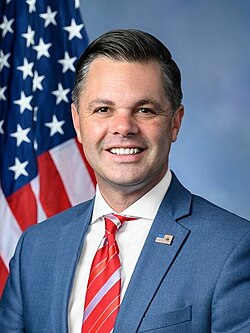
Representative Zach Nunn (R‑Iowa) will be meeting with the leadership committees of Friends of Traditional Banking next month to discuss the latest in how Congress is addressing banking issues. Backed by FOTB last year in his reelection, Congressman Nunn has played a pivotal role in shaping financial industry policy in 2025.
As Vice Chair of the House Financial Services Subcommittee on National Security and related panels, he has been busy. In March, he co‑introduced the Financial Technology Protection Act, aimed at disrupting terrorist financing and money laundering via digital platforms. The bill established a high‑level interagency working group in collaboration with industry stakeholders.
By July, the House had passed the legislation unanimously, with Nunn emphasizing: “We got it done—this bipartisan bill… brings government and industry together to crack down on terrorists and criminals using digital assets.”
At a digital assets hearing, Nunn advocated for a modern regulatory framework, stating, “Digital assets are going to open the door to endless possibilities for anyone in both financial, and candidly, non‑financial services.”
He also backed the STABLE Act, the Anti‑CBDC Surveillance State Act, and a repeal of burdensome small‑business lending data rules — part of a broader push for clearer, innovation‑friendly oversight across emerging financial technologies.
If you are interested in joining FOTB leaders on this Zoom chat, please contact mike@mikewinder.com
| |
Banks Push Congress to Close GENIUS Act Stablecoin Gaps
The nation’s banking industry is intensifying efforts to close loopholes in the recently enacted GENIUS Act, which governs dollar-backed stablecoins. While the law prohibits issuers from paying interest, critics warn that affiliates such as exchanges or brokers could still offer yield-like products, drawing trillions of dollars in deposits away from banks.
The American Bankers Association (ABA) has urged lawmakers to strengthen the law by extending the interest ban to affiliates and restoring state-level oversight. The ABA argues that unchecked stablecoin incentives could erode bank deposits, raise borrowing costs, and weaken the industry’s ability to fund credit.
Similarly, the Independent Community Bankers of America (ICBA) has pressed Congress to protect smaller lenders. ICBA leaders called for repealing Section 16(d), which limits state supervision, and cautioned that community banks face heightened risks of disintermediation if loopholes remain.
Together with these trade groups and state banking associations, Friends of Traditional Banking encourages swift legislative fixes. After all, ensuring fair competition is critical to preserving consumer trust, maintaining credit flows, and supporting long-term financial stability.
| |
BANKER NEWS BITS:
- Bipartisan state AGs urge Congress to grant access to federally regulated banking and financial services to state-regulated cannabis businesses, reports Regulatory Oversight. Such clarity, they argue, is urgently needed to address public safety risks and to improve the states’ ability to regulate and tax the booming cannabis industry.
-
Trump's pick for Fed governor would love to overhaul the central bank, opines Axios. "Miran will, if confirmed, be a voice for Trump's desired interest rate cuts," they note of Stephen Miran, who has been leading the White House Council of Economic Advisors. "But Miran's critique of how the Fed operates goes much deeper — and his conception of central bank independence is distinctly non-mainstream," they say.
-
In-store biometric payments are poised to take off, according to American Banker. "Boosted by tests from JPMorganChase and Amazon, in-store biometric payments are poised to expand quickly," they say. J.P. Morgan is already experimenting with enabling consumers to pay by smile to decrease checkout times, increase purchase value, and build customer trust.
| | |
SPONSOR'S CORNER
Beware of Fake
Law Enforcement Scams
| |
A message from our sponsor BankOnITUSA:
Have you gotten a call that looks like it’s from your local police department? Scammers are faking caller ID to impersonate local law enforcement, hoping to get you to pay. Learn how this scam works so you can avoid it.
The call comes from someone claiming they’re a sheriff or deputy at your local police department. They say they’ve confiscated a package with your name on it. It’s filled with money, illegal drugs, or weapons — and you’ll be arrested unless you pay a fine. To avoid being arrested, they might tell you to send cash, deposit money at a Bitcoin ATM, buy gift cards and give them the numbers, or send money over a payment app like Zelle, Cash App, or Venmo.
Even if the caller uses the name of a real officer, has a real number show up on caller ID, or has information about you (like your address), that’s not a real officer calling. It’s a scammer trying to steal your money.
Learn what to know when these scams hit from our platinum sponsor, BankOnIt HERE: https://insights.bankonitusa.com/information-security-brief-july-2025
| | Want to provide content in our Sponsor's Corner? Reach out about being a partner! mike@friendsoftraditionalbanking.com | |
PAID for by Friends of Traditional Banking. NOT authorized by any candidate or candidate's committee.
Friends of Traditional Banking is a non-partisan grassroots effort organized by bankers in 2012 to improve the political and regulatory environment for the traditional banking industry in the U.S. FOTB is the inverse of a PAC--instead of spreading a little bit of money to a lot of campaigns, they focus a lot of money on a couple of key campaigns.
| | | | |