|
Now Even the Senate Could Be a
Toss Up This Fall
|
|
|
The outlook for the 2026 midterm elections continues to evolve, and
some analysts now suggest that control of the United States Senate - once viewed as
relatively stable - could become competitive this November. This opens a huge opportunity
for bankers uniting around key races to exert enormous influence.
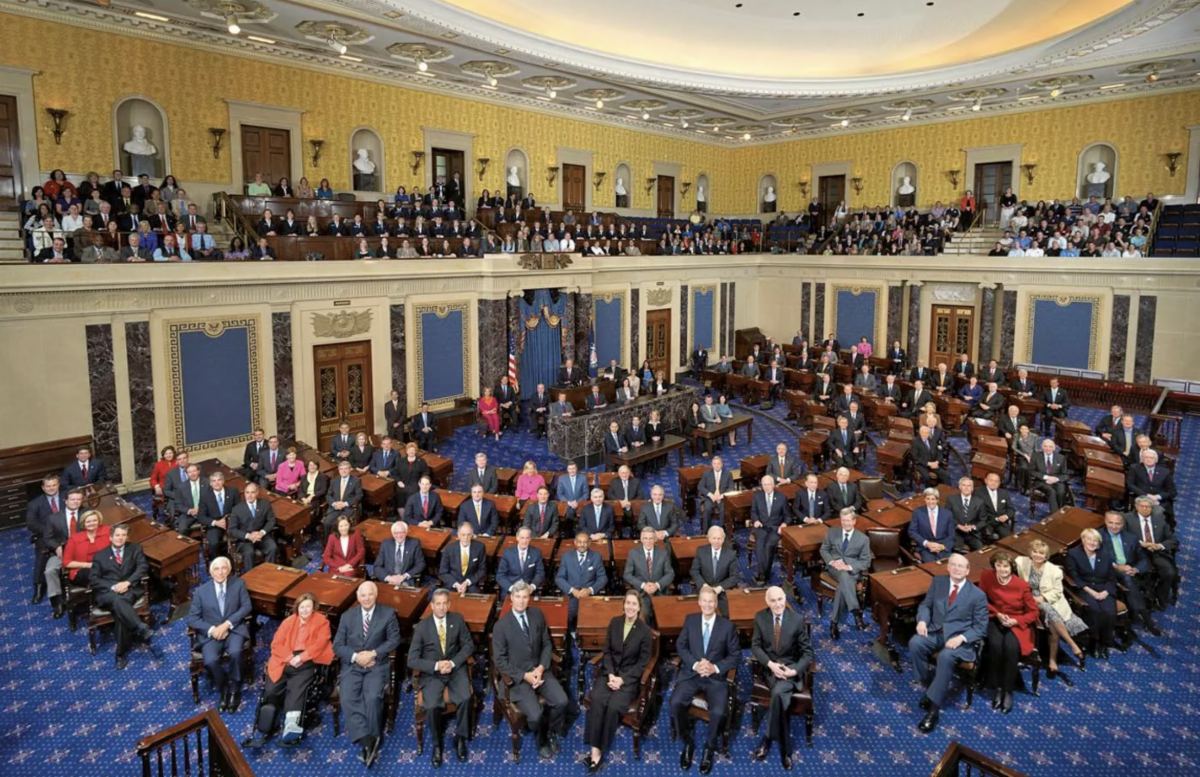
With 35 seats on the ballot and a narrow 53 - 47 Republican majority,
the chamber is emerging as a potential battleground in a closely divided political
environment.
A key factor in this shift is a changing electoral landscape,
influenced by national political conditions and an expanding number of competitive
races. Both parties are assessing the durability of current alignments, as polling shows
a closely divided electorate and competitive contests in states such as Georgia,
Michigan, North Carolina, Maine, and Texas.
Historically, midterm elections often reflect public sentiment toward
the sitting president. Early indicators suggest 2026 may follow this pattern, with
analysts pointing to approval ratings and economic perceptions as factors that could
influence outcomes, consistent with past midterm trends.
At the same time, structural realities shape the path for either
party to gain or maintain a majority. The Senate map requires Democrats to compete in
several Republican-leaning states, while Republicans must defend seats in increasingly
competitive areas. Candidate recruitment, campaign strategy, and shifting voter
coalitions are likely to play important roles in determining the outcome.
As the campaign season progresses, the Senate landscape highlights a
broader theme of the 2026 cycle: uncertainty. What once appeared more predictable is now
more fluid, and control of Congress may ultimately depend on a small number of closely
contested races. The races Friends
of Traditional Banking will jump in to influence may be the very races that
determines who holds the Senate.
|
|
Utah's White Named Banker Board Rep
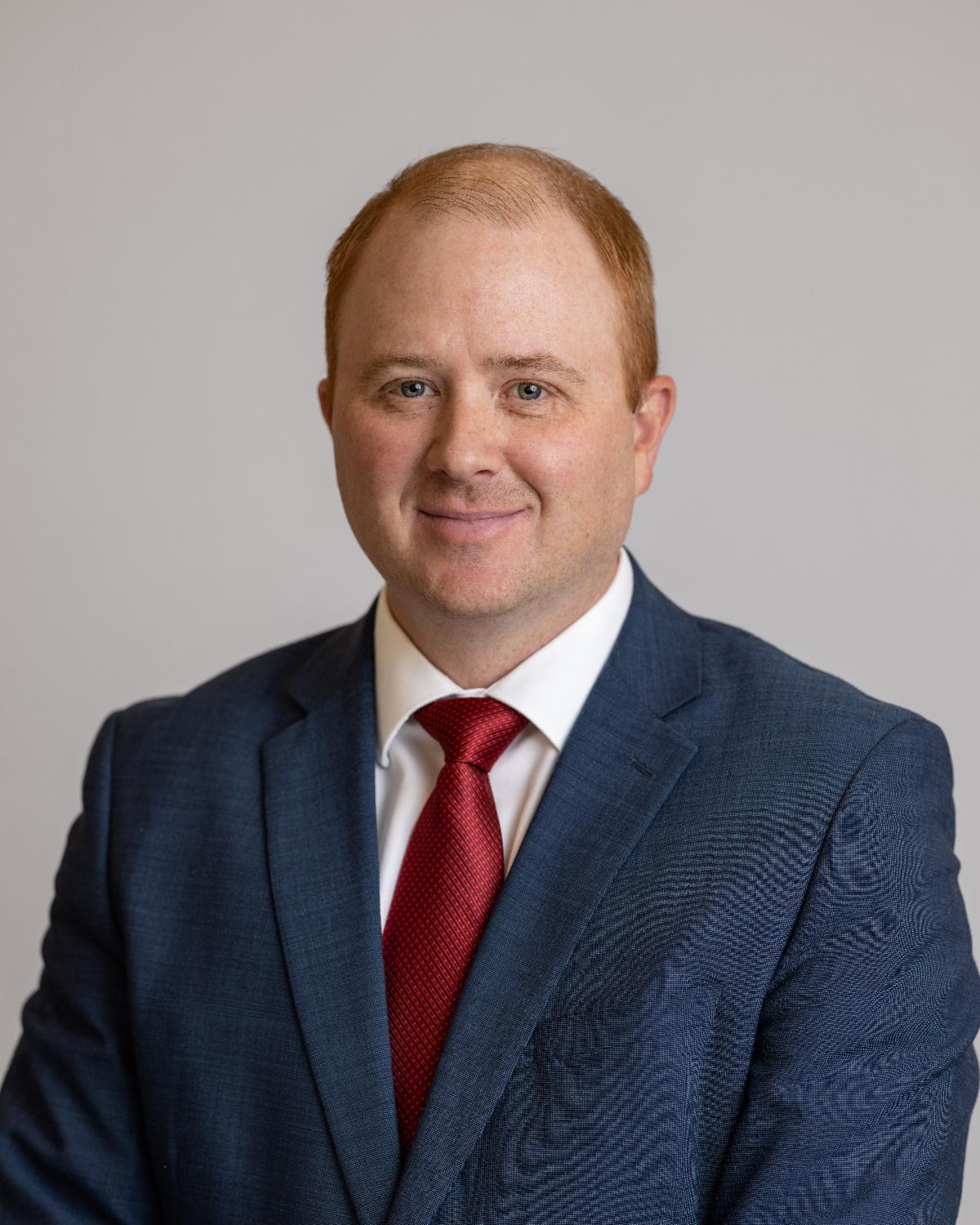
Spencer B. White has been appointed to represent Utah on FOTB's Nationwide
Banker Board. He serves as President & Chief Executive Officer of Utah
Independent Bank, where he has worked for over two decades, progressing from teller to
CEO. He brings extensive experience in community banking, including financial
management, lending, governance, and regulatory engagement.
Mr. White is an active industry leader, currently serving on advisory
councils with the Federal Reserve Bank of San Francisco, including both the Twelfth
District and National Community Depository Institutions Advisory Councils. He has also
served on the Board of Directors for the Utah Bankers Association and remains engaged in
local economic development and community leadership initiatives.
A graduate of Pacific Coast Banking School and Southern Utah
University, Mr. White is a strong advocate for the role of community banks in supporting
local economies. As the Utah Representative for Friends of Traditional Banking, he is
committed to preserving relationship-based banking and advancing policies that support
independent financial institutions.
|
|
BANKER NEWS BITS:
- Friends of Traditional Banking Gears Up for a 14th Year of Impact,
we read in The
American Banker. "We are excited to once
again identify the absolute most critical races for our industry and then encourage
thousands of donations of all sizes to tip the scales for victory," said Amada
Alvidrez, board chair and Regional Retail Manager for Equity Bank in Guymon, Oklahoma
in the release. "We are thrilled to watch our ranks of community bankers and allies
keep growing, and we are preparing for our biggest year of impact yet," added board
vice chair Greg Hayes, President & CEO of Kish Bank in State College,
Pennsylvania.
- Debate continues on FDIC Cap. Norbert Michel
at the
Cato Institute argues that the several bipartisan efforts to increase the cap of
FDIC insurance should be abandoned. "Less than 1 percent of bank accounts have more
than the current FDIC insurance limit," he says. "The typical American - even the
typical wealthy American - simply doesn't have anywhere near $250,000 in a bank
account." In the Senate, Senators Bill Hagerty (R-TN) and Angela Alsobrooks (D-MD) are
set to introduce a new bill that would give the FDIC six months to choose “a deposit
insurance cap between $250K & $5M instead of setting it at $10M.”
- Trump's Fed Chair nominee faces Senate Banking Committee. Federal
Reserve chair nominee Kevin Warsh answered questions from the Senate Banking Committee
at his confirmation hearing this week. According to CNBC,
Sen. Elizabeth Warren, the top Democrat on the committee, lit into Warsh over his
personal wealth and his independence from President Donald Trump. Warsh insisted “the
president never asked me to commit to interest rate cuts at any particular meeting
over the period of my tenure at the Fed. He didn’t ask for it. He didn’t demand it. He
didn’t require it, and nor would I have ever done so.”
- House and Senate may disagree on housing bill,
according to Politico.
The U.S. Senate on March 12, 2026, passed its version of the 21st Century ROAD to
Housing Act (H.R. 6644) by a vote of 89-10. The bill now returns to the U.S. House of
Representatives for further consideration. Among areas raising significant concerns
from homebuilders, according to Holland
& Knight, is the section which restricts "large institutional investors"
(LII) from purchasing single-family homes (SFH). House Financial Services Committee
Chair French Hill (R-Ark.) and ranking member Maxine Waters (D-Calif.) are
collaborating on amendments to the Senate's housing bill in an effort to send text
back to the upper chamber in the coming weeks.
- Josh Miller's appointment to FOTB's Banker Board was picked up by Yahoo!Finance and other news outlets. "Miller's appointment
reflects his deep alignment with and longstanding support of the community banking
sector," they report.
|
|
|
SPONSOR'S CORNER
Why We Became Navanta |
|
A message from our sponsor Navanta:
When I think about community financial institutions, I think about
the many people I know who make these institutions what they are. The lenders who know
every business owner in town. The tellers who notice when someone is having a hard week.
The executives who work tirelessly to navigate their team through uncertainty and
change. The board members who fight tirelessly to keep their franchise viable and strong
for their local community. Community bankers don’t just manage transactions; they help
strengthen and bond communities.
For decades, each of our legacy companies has worked to support that
mission in its own way. BankOnIT helped banks build strong technology foundations. Quest
Analytics unlocked the power of data to enable growth and service. Safe Systems made
security and compliance manageable. And UFS, founded by three community banks, brought
core expertise and a deep partnership philosophy into the equation.
Two years ago, we made a decision: we could do more together than we
ever could apart.
See the full message from Eric Jones with our platinum sponsor, Navanta HERE: https://navanta.com/resources/a-message-from-eric-jones-why-we-became-navanta/
|
|
PAID for by Friends of Traditional Banking. NOT authorized by any candidate or
candidate's committee.
Friends of Traditional Banking is a non-partisan grassroots effort organized by
bankers in 2012 to improve the political and regulatory environment for the
traditional banking industry in the U.S. FOTB is the inverse of a PAC--instead of
spreading a little bit of money to a lot of campaigns, they focus a lot of money on a
couple of key campaigns.
|
|
|
|
|